Import from Bruno
This feature is powered by the Bruno Collection Importer — a core plugin that comes bundled with Voiden, so there's nothing extra to install.
Already living in Bruno? No problem — bring your whole collection over to Voiden in a couple of clicks. No rebuilding from scratch, no copy-pasting requests one by one.
Voiden reads Bruno 3.0+'s whole-collection OpenCollection YAML export, and turns everything — requests, folders, environments, auth, even scripts — into ready-to-use .void files.
What You'll Need
Either of the following, exported straight from Bruno:
- A full OpenCollection YAML export
- A Bruno environment file
Note: A standalone classic
.brurequest file can't be imported on its own — export the full collection instead.
How to Import
- Open the file — your OpenCollection export or an environment file
- Find the "Import into Voiden" button — it's sitting right there in the file's tab toolbar
- Click it — Voiden rebuilds your folder structure exactly as it was, or converts the single request if you opened one from a directory-based export
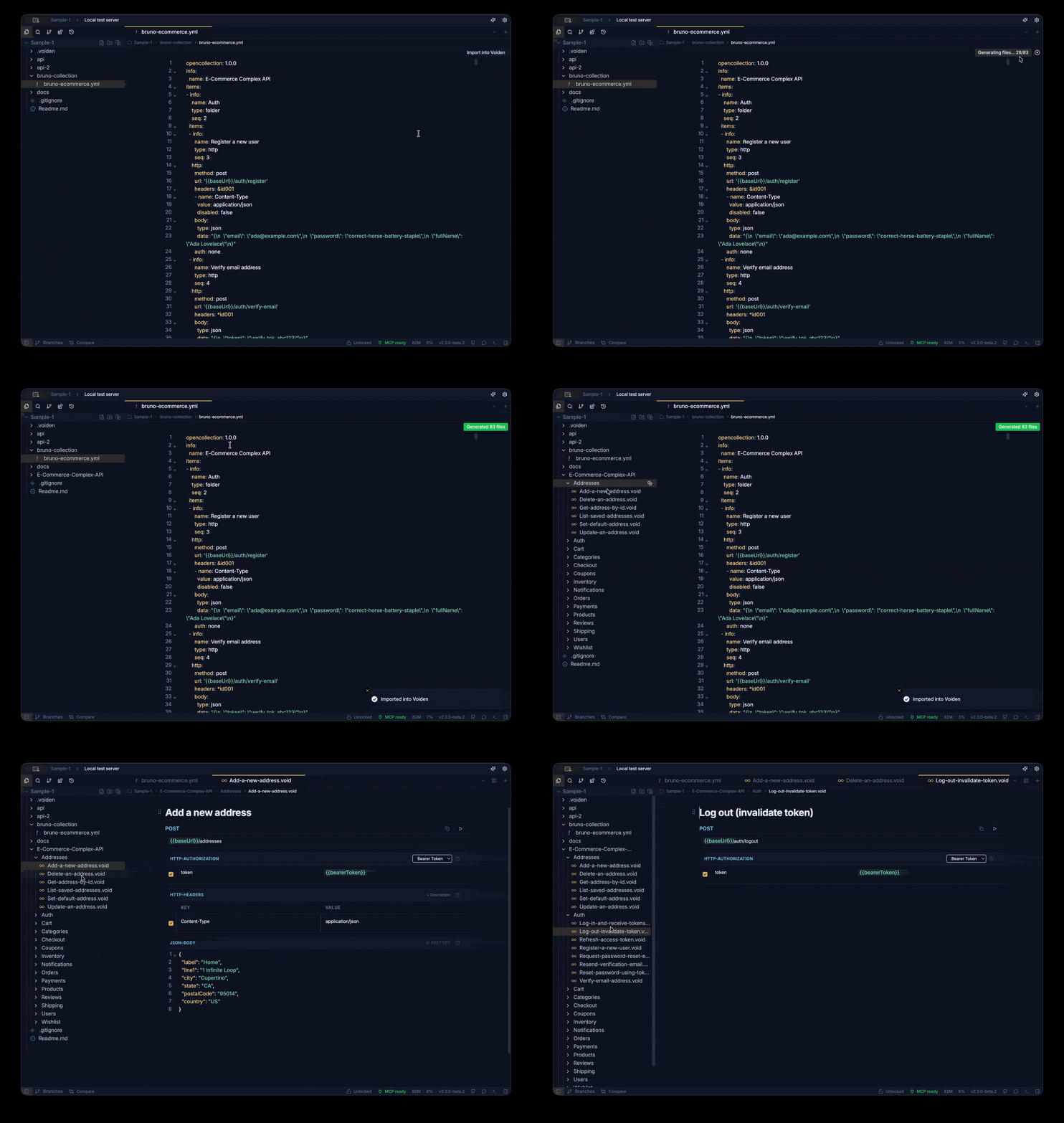
- You're done — every request becomes its own
.voidfile, with endpoints, params, auth, and scripts all in place
Import Your Environments Too
Got environments set up in Bruno? You don't have to redo them.
- Open your Bruno environment file (
environments/<name>.bru) in Voiden - Click Import into Voiden
- That's it — your environment is merged right into your existing Voiden environments, nothing gets overwritten
What Gets Converted
- All HTTP endpoints, plus GraphQL, gRPC, and WebSocket requests
- Headers and authentication — Basic, Bearer, API Key, Digest, AWS Signature v4, NTLM, OAuth1, and OAuth2
- Query params, path variables, and
:paramURL segments - Request bodies of every flavor — JSON, XML, plain text, form URL-encoded, multipart, raw files, GraphQL, and gRPC/WebSocket payloads
assert{}blocks, turned into live assertion tables- Pre-request and post-response scripts — brought in as live blocks when it's safe to, or commented out for you to review otherwise
Ready to Go
One import, everything set up. Your Bruno collection becomes a clean, ready-to-use API foundation in Voiden — no manual rework, no room for mistakes.