OpenAPI Schema Validation
When you import an OpenAPI .yaml or .json file and generate Voiden requests, Voiden automatically validates your request bodies against the schema on every call — no extra setup required.
No guessing. No assumptions. Just what your spec actually defines.
How It Works
Once you've imported an OpenAPI schema and generated a .void file:
- Each API is separated into its own
.voidfile - Request bodies are pre-generated directly from the schema
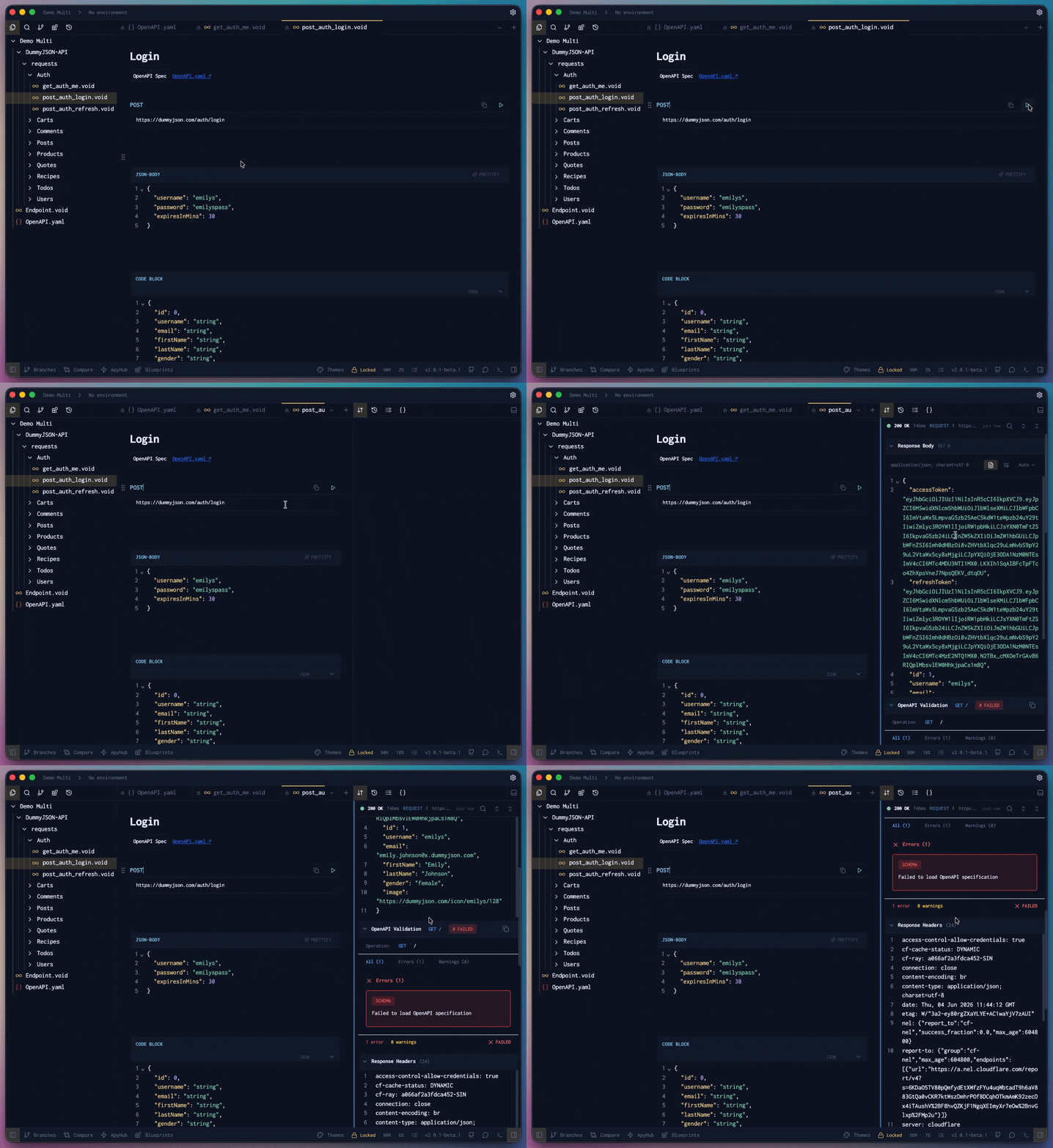
- Validation errors and warnings appear after each request is sent, inline in the response panel
You get immediate feedback while you're working — not after something breaks in a way that's harder to trace.
Running Validation
Open the generated .void file and run a request:
- Keyboard:
Cmd + Enteron macOS /Ctrl + Enteron Windows & Linux - Mouse: click the green ▶ Play button in the toolbar
Voiden will validate the request body against the schema automatically.
Supported Validation Rules
Voiden covers a broad set of OpenAPI validation checks out of the box:
| Category | Supported Rules |
|---|---|
| Type Validation | string, number, integer, boolean, array, object |
| String Constraints | minLength, maxLength, pattern, format (email, UUID, URI, date-time), enum |
| Number Constraints | minimum, maximum, exclusiveMinimum, exclusiveMaximum, multipleOf, enum |
| Array Constraints | minItems, maxItems, uniqueItems, items, contains |
| Object Constraints | required, properties, additionalProperties, minProperties, maxProperties |
| Schema Composition | oneOf, anyOf, allOf, not |
| Special Rules | nullable, required vs optional parameters |
What Gets Validated — and What Doesn't
Voiden validates only what is explicitly defined in your OpenAPI spec:
- Required vs optional fields
- Data types and their constraints
- Allowed and disallowed properties
Voiden never infers undocumented fields or applies validation beyond what your schema defines. This keeps behaviour predictable and your tests aligned with your actual API contract.
Why This Matters
Most API testing tools let you send anything to an endpoint. Voiden ties your requests to the schema you already wrote, which means:
- You catch malformed request bodies before they reach your server
- Your
.voidfiles act as living, validated documentation - Onboarding a new team member means handing them a file — the schema tells them exactly what's valid
The goal isn't to restrict what you can do. It's to make the right thing the easy thing.