OAuth1 Authorization Block
OAuth 1.0 is a secure protocol that allows an application to access protected resources on behalf of a user — without directly sharing their credentials. It uses a signature-based approach, combining consumer keys, tokens, and cryptographic signing to verify each request’s authenticity.
Voiden supports OAuth 1.0 authentication as well, enabling you to connect with APIs that require this older but still widely used standard (such as some legacy or enterprise systems).
Try it Out
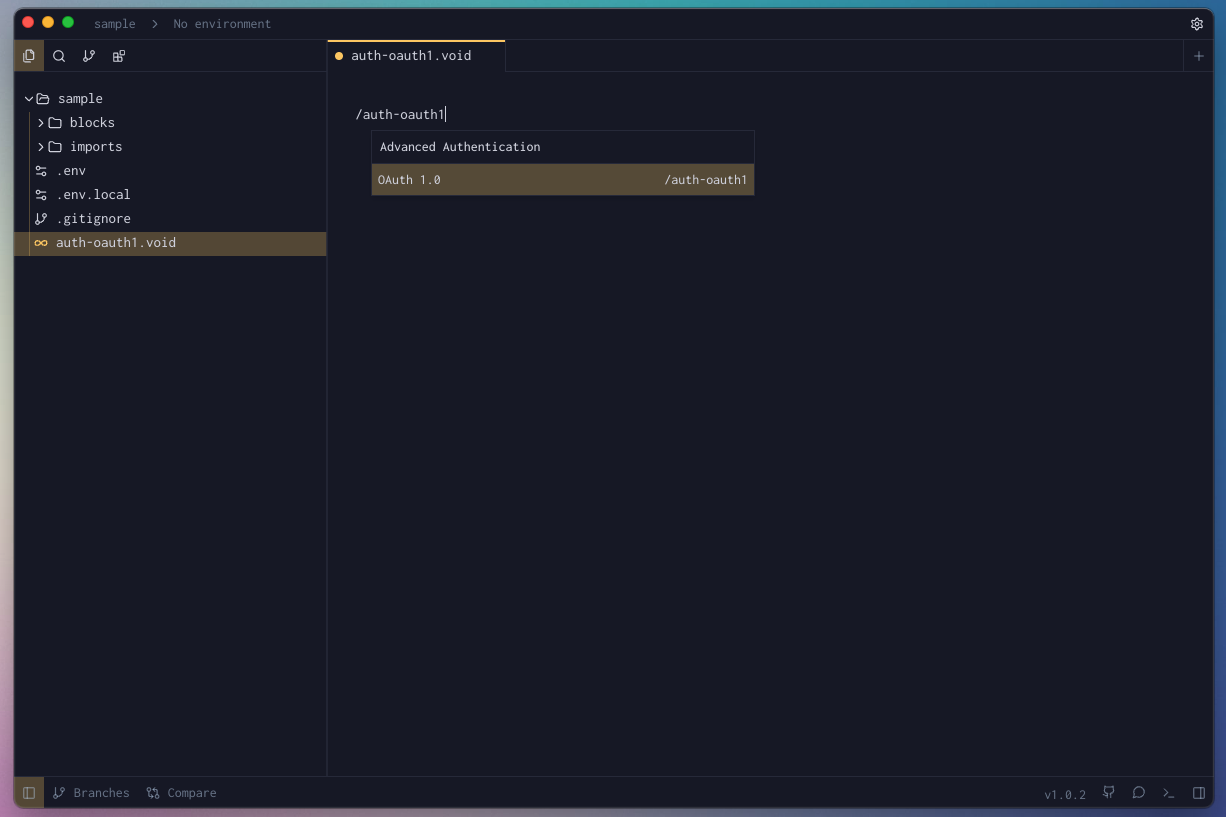
- In your Voiden file, type
/auth-oauth1and press Enter to create an Authorization Digest Block.
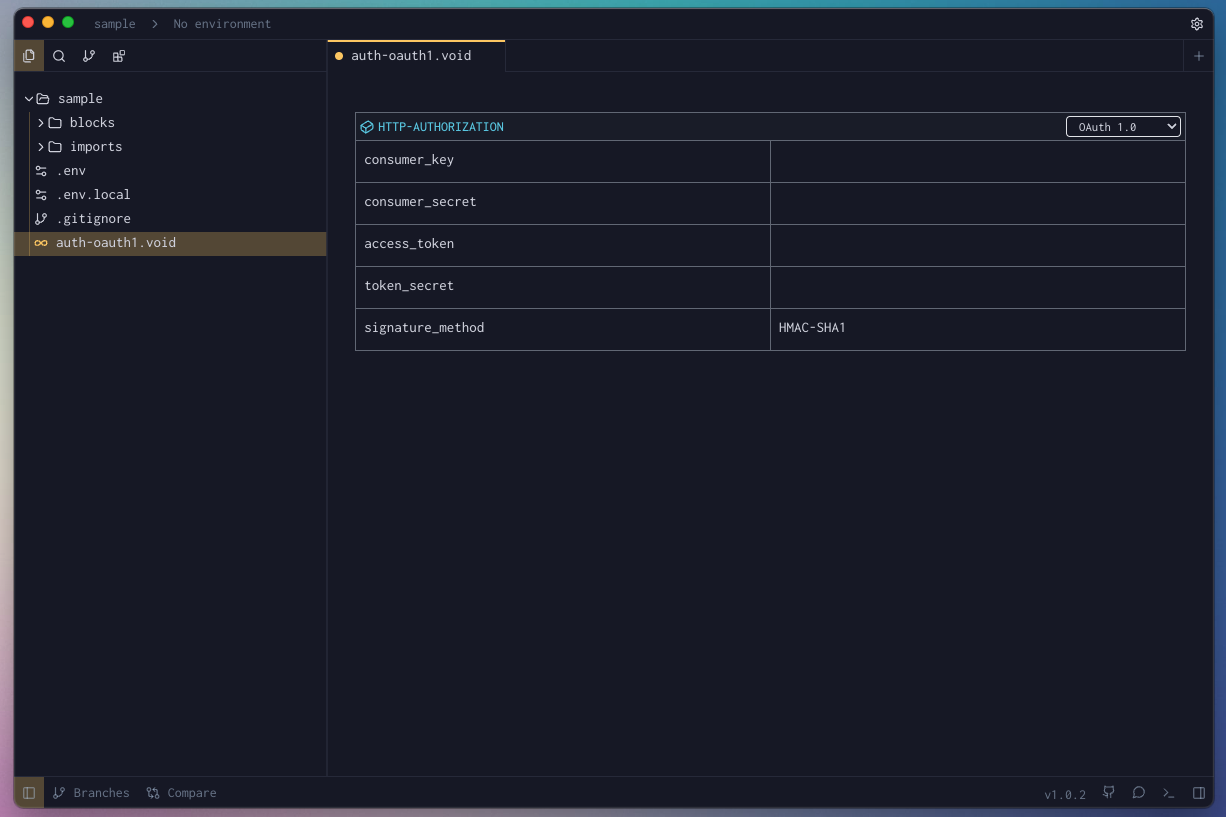
- Fill the required params for the block.
-
Hit Cmd + Enter (Mac) or Ctrl + Enter (Windows/Linux) to run the request
or click the green Play button in the toolbar. -
Check the Response Panel
Block Parameters
| Parameter | Value | Description |
|---|---|---|
| consumer_key | string | The public identifier for the client application, issued by the API provider. It tells the server which application is making the request. |
| consumer_secret | string | The private key associated with the consumer key. It’s used along with the token secret to sign requests and verify authenticity. |
| access_token | string | A token that represents the user’s authorization and grants the client access to protected resources. |
| token_secret | string | A secret associated with the access token. Used together with the consumer secret to generate the request signature. |
| signature_method | string | The algorithm used to sign the request (e.g., HMAC-SHA1, RSA-SHA1, or PLAINTEXT). It ensures the request hasn’t been tampered with during transmission. |